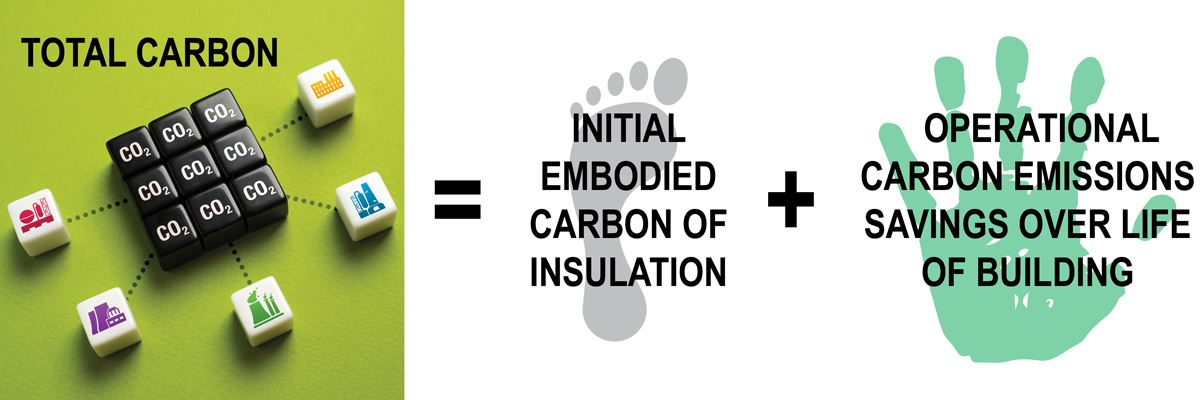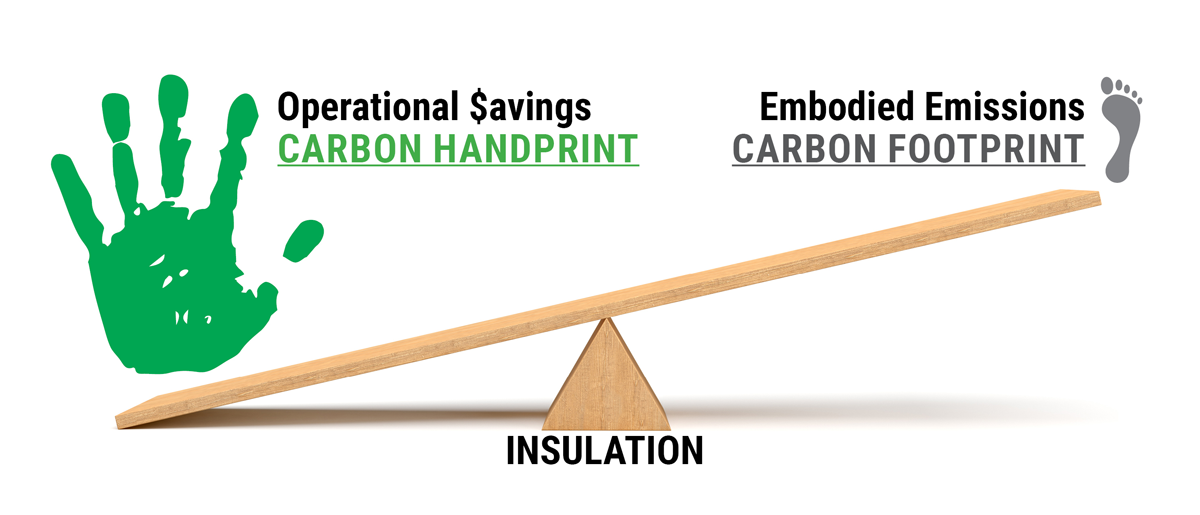
ABTG’s Insulation Total Carbon Calculator gives builders, designers, and energy professionals a clear, data driven way to evaluate the total life cycle carbon performance of insulation used in wood frame wall assemblies. Rather than focusing on embodied carbon alone, the calculator captures both sides of the story: the carbon footprint (emissions associated with producing the insulation) and the carbon handprint (the operational emissions it reduces through energy savings). This provides a far more complete and accurate picture of insulation’s true climate impact over a building’s service life (assumed to be 60 years).
To simplify complex carbon accounting, the calculator uses two key metrics to characterize the total carbon life-cycle performance of the insulation materials and methods included in a user-defined wall assembly. The carbon avoidance ratio compares the insulation’s lifetime operational carbon savings to its embodied carbon. The carbon payback period shows how long it takes for operational savings to “pay back” the insulation’s initial embodied emissions. Users can then visualize these indicators in easy to read and informative charts that illustrate the total carbon profile over time for insulation materials and methods defined by the users.
Whether you’re comparing insulation strategies, optimizing a wall assembly, or communicating carbon performance to clients and stakeholders, this calculator translates a complex science-based problem into clear, actionable insights. It empowers users to make informed decisions that support rational decarbonization goals—without sacrificing overall performance, energy efficiency, comfort, and practicality. The result is a balanced, total carbon view of insulation’s true climate-mitigation role throughout a building’s life.
GO TO CALCULATOR FACTS SHEET: Building Decarbonization Insights SUSTAINABILITY & DECARBONIZATION