Roofing and roof assembly requirements are found in IBC Chapter 15 and IRC Chapter 9 with insulation requirements found in IECC Section C402.1.3 and IECC Section R402.1.3 for commercial and residential buildings, respectively. Together these codes address several roof applications of FPIS ci:
Low-slope
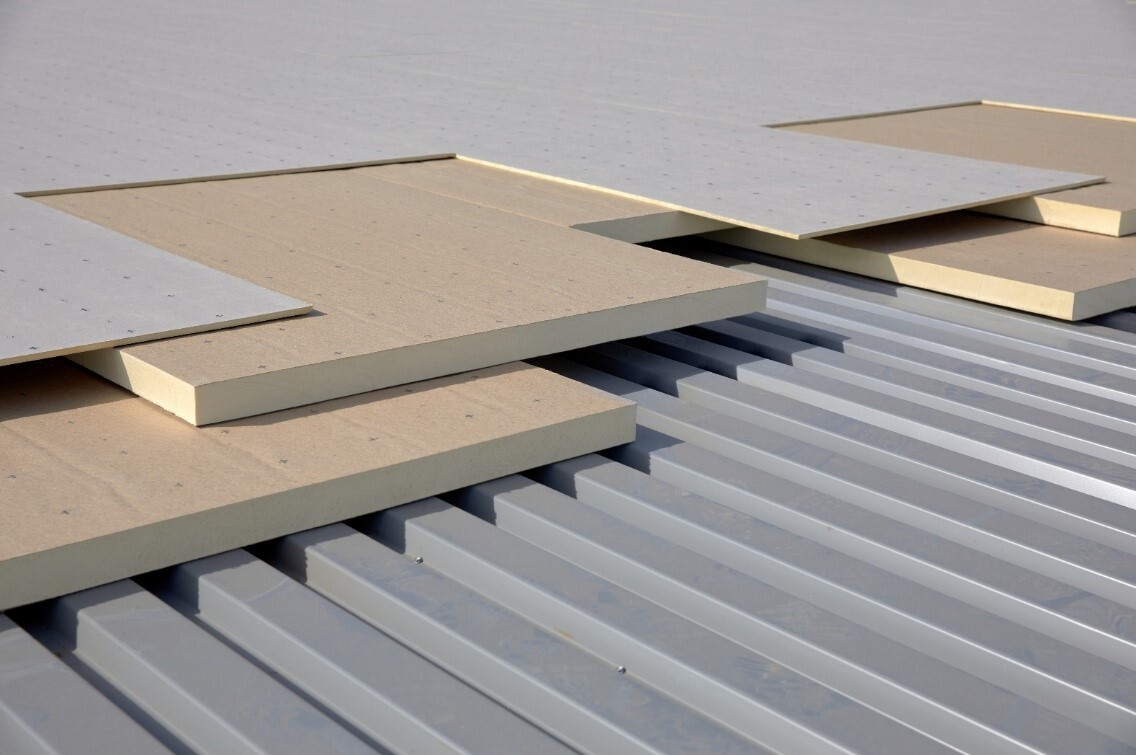
FPIS installed above the roof deck (see Figure 1) delivers the prescriptive ci R‑values needed for energy code compliance (e.g., R‑25ci up to R‑35ci depending on IECC Climate Zone). A minimum of two layers is required to allow for staggering of FPIS panel joints for improved roof assembly performance. Tapered FPIS is used where needed to provide adequate slope for drainage (e.g., the roof deck is flat or an existing roof requires improved drainage).
Some FPIS products can be located above the roof membrane as part of a Protected Membrane Roof (PMR) system now recognized in the 2024 IBC. FPIS materials are also commonly used in vegetative/landscaped roof assemblies or “green roofs.”
Steep-slope (vented roof assembly)
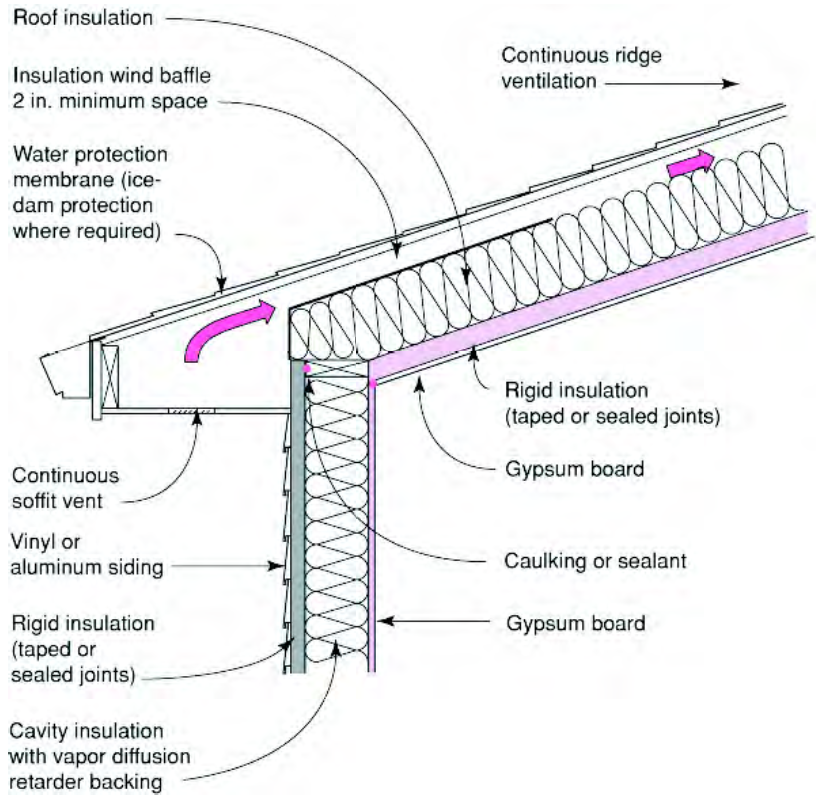
FPIS can be used on the underside of a vented roof assembly and is particularly useful for cathedral roofs as part of a “hybrid” roof assembly (see Figure 2 below) with a combination of FPIS ci (on interior side of rafters), cavity insulation (between rafters), and roof cavity ventilation (below the roof deck). Such assemblies are particularly useful in achieving high R-values for energy code compliance while still using conventional rafter sizes/depths.
Steep-slope (unvented roof assembly)
For unvented attics and cathedral roofs, FPIS ci can be used in two ways:
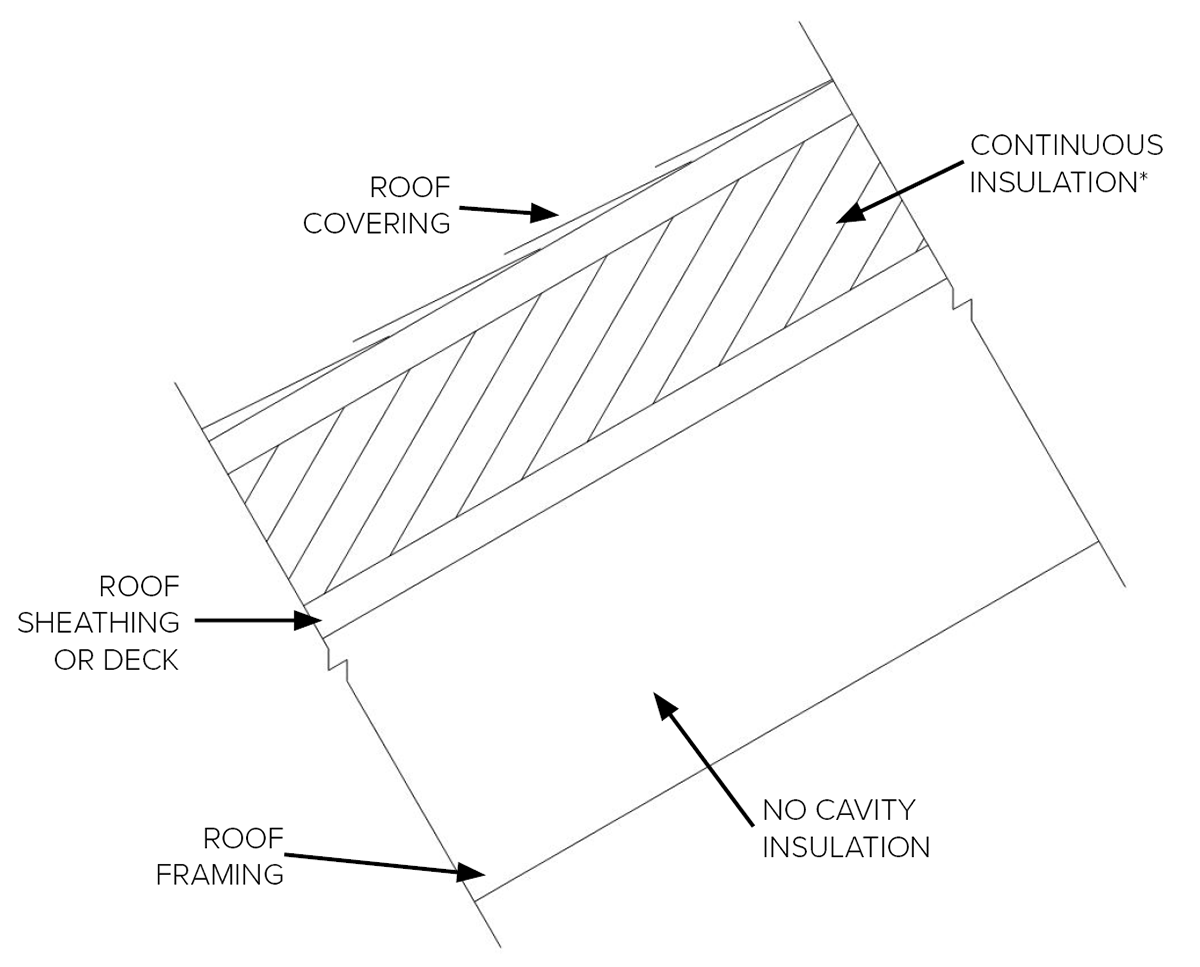
- FPIS ci can be placed entirely above the steep-sloped roof deck as shown in Figure 3. Similar to that shown previously for low-slope roofs, where no additional insulation is needed below the roof deck, this approach is necessary where the underside of the roof assembly serves as the interior finish. However, certain roof coverings (like shingles) will require a nailable coverboard for installation of underlayment and the roofing product. Vented FPIS roof panels also are available for this application, which include FPIS insulation laminated to wood structural panel sheathing in a configuration that forms a vent channel under the roofing material to help remove heat on those hot/sunny summer days.
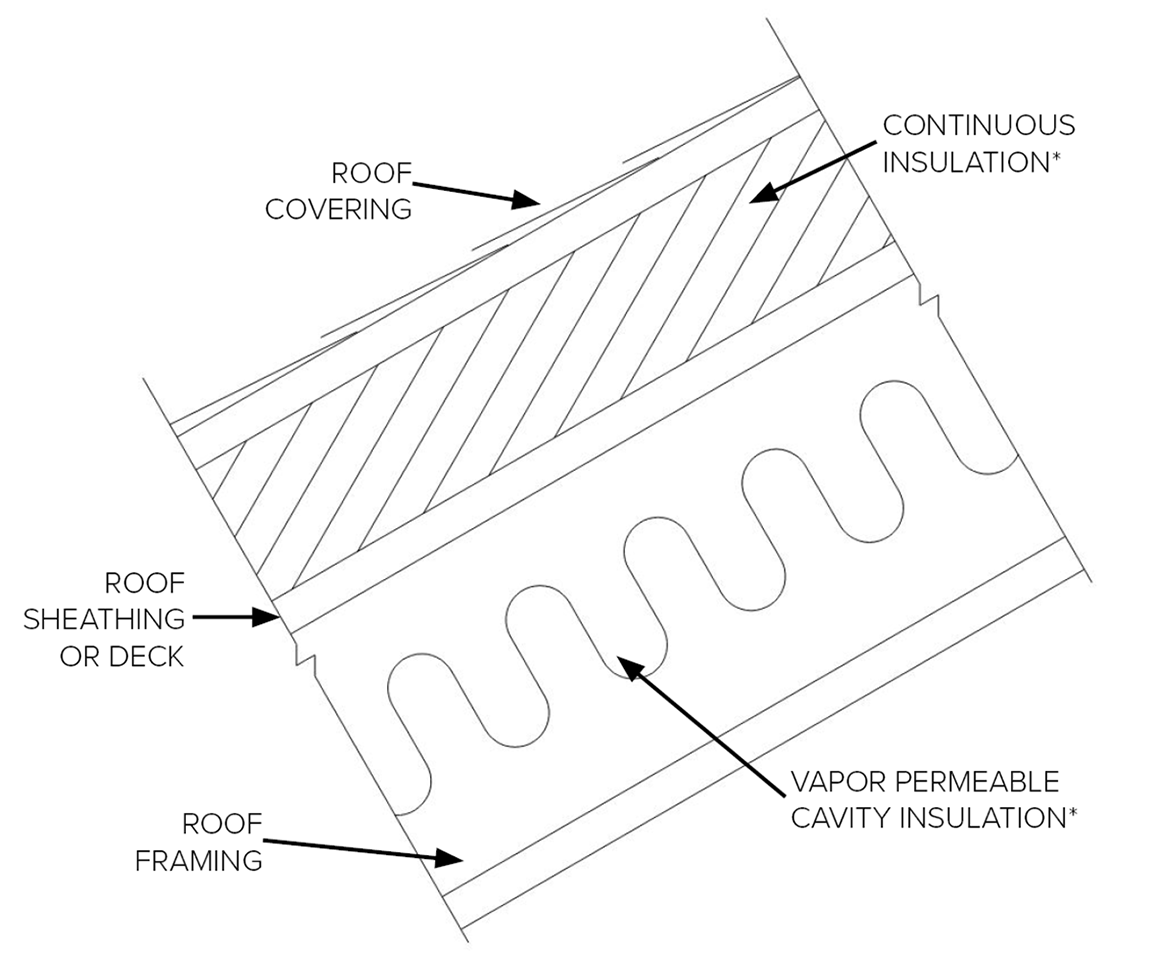
- FPIS ci can be placed above the roof deck in combination with other cavity insulation placed between rafters below the roof deck as shown in Figure 4. Where this hybrid approach is used for an unvented roof assembly, the insulation material R-values must comply with the energy code (by way of a U-factor check of the roof assembly) and must comply with building code requirements to control water vapor. Refer to IBC Section 1202.3 and IRC Section R806.5 and be sure to provide the appropriate amount of FPIS ci based on the climate and the amount of air/vapor permeable insulation placed between the rafters below the roof deck.
Helpful Resources
Back to Multifunctional Applications
See Also: Floors • Walls • Windows • Foundations